5 Grounding Techniques to Support Healing
Category: Trauma
Grounding isn’t about “fixing” everything or forcing yourself to feel calm. It’s about gently bringing your attention back to the present moment.

Topic Of Discussion
Trauma can leave your nervous system feeling like it’s always “on alert,” even when you’re technically safe. You might notice racing thoughts, tension in your body, or a sense of being disconnected from yourself or your surroundings. That’s where mindfulness—especially grounding—can make a real difference.
1. Start with your senses
Grounding isn’t about “fixing” everything or forcing yourself to feel calm. It’s about gently bringing your attention back to the present moment, where safety and stability can start to take root. When your mind is spinning, your senses can act as an anchor. You might try noticing what you can see, feel, hear, smell, and even taste. It sounds simple, but tuning into your environment helps shift your brain away from “what if” thinking and back into what’s actually happening right now.
2. Breathe… but keep it simple
Breathing is another powerful tool, although it’s not always as easy as people make it sound. Instead of trying to take perfect deep breaths, it can help to simply slow things down a little. Breathing in for a steady count and then letting your exhale last just a bit longer can signal to your body that it’s okay to soften. Even a small change in your breathing pattern can begin to calm your nervous system.
3. Use your body as an anchor
Trauma can also make you feel disconnected from your body, so gently reconnecting through movement can be grounding. This doesn’t have to mean anything intense or structured. It might look like pressing your feet into the floor, stretching your arms, or taking a short walk and noticing how your body moves. The goal isn’t performance—it’s awareness and connection to where you are right now.
4. Name what’s happening (without judgment)
Another helpful approach is naming what’s happening in the moment without judging yourself for it. Quietly acknowledging, “I’m feeling anxious right now” or “This is a memory, not something happening in the present,” can create space between you and the intensity of the experience. You’re not pushing the feeling away, but you’re also not letting it completely take over.
5. Create a small “safe moment” ritual
Over time, it can also help to create small, consistent rituals that signal safety to your brain. This could be something as simple as wrapping yourself in a blanket, holding a comforting object, or playing a specific song that helps you feel at ease. These moments don’t have to be elaborate to be effective—they just need to be repeated enough that your mind begins to associate them with a sense of calm.
6. Remember: progress can be subtle
Healing from trauma rarely happens all at once, and grounding won’t erase difficult feelings overnight. Some days it may feel like these tools aren’t doing much at all, while other days you might notice you’re able to settle a little faster or feel slightly more in control. Those small shifts matter more than they might seem—they’re signs that your nervous system is learning that it doesn’t always have to stay in survival mode.
Wrapping it up
Grounding is a skill that builds over time, and the more you practice, the more natural it can begin to feel. If trauma is making it hard to get through daily life, our qualified counselors at Tri-Star Counseling can offer additional support, guidance, and tools to help you feel more steady, safe, and connected.
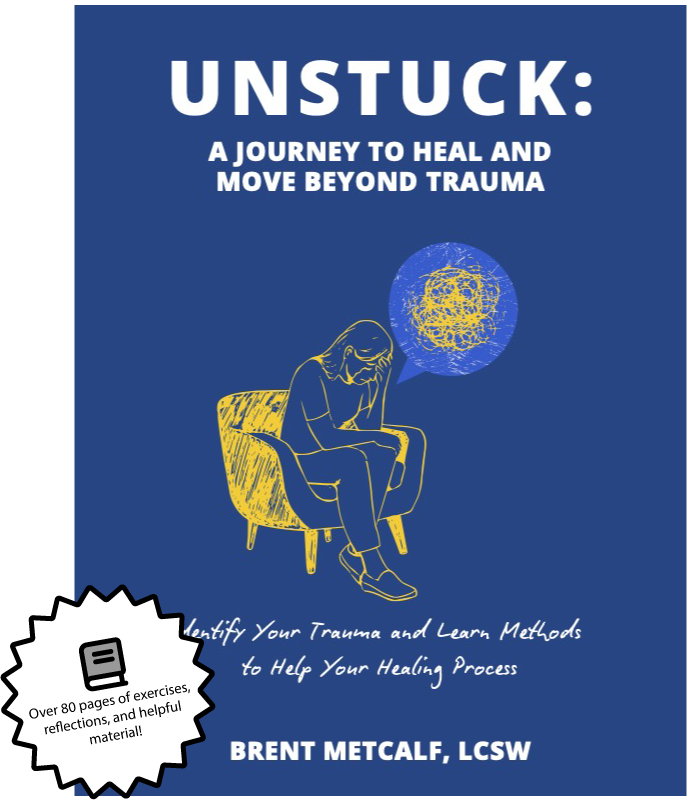
Identify Your Trauma Learn Methods to Help Heal Start Your Healing Journey Today!
The UNSTUCK workbook is designed to help you move beyond trauma by answering key questions like, Can you get stuck at the age your trauma happened? Through guided exercises, you’ll explore different types of trauma and break free from patterns holding you back. Take the next step in your healing journey today!